“You have a right to perform your prescribed duties, but you are not entitled to the fruits of your actions. Never consider yourself the cause of the results of your activities, and never be attached to not doing your duty.”
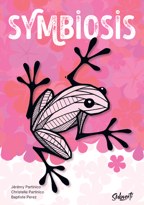
I am currently making my way through Classical Indian Philosophy by Peter Adamson and Jonardon Ganeri. Yes, it is exactly like you would imagine. The line above is something that I used as a basketball coach for some of my kids. It has always been my favorite sport and something I wanted to share it them. It was fitting quote, then and there. Now thinking about it and games I have played recently pulled it back to the forefront of my memory. It helps to remember where this line is spoken.
As many will not be familiar, you should know that the above quote is spoken by Krishna to Arjuna. Arjuna is a great warrior and on the eve of a massive civil war, is standing in his chariot between two armies, looking across the field he sees teachers, family members and old friends, causing him pause and he sits down his bow. Unable to see how any outcome of the fight could be good, he decides that the best thing is to do nothing at all. Krishna’s answer, which continues for chapters, begins here: act, but give up your claim on what the action produces.
I’ve been turning that over this week while playing Symbiosis, which feels like an absurd place to bring the Gita, a card game about frogs, snails, fish and dragonflies. But games are small, contained worlds where the shape of a problem stands out more clearly than it does in the rest of our daily lives, and this one has the exact shape of Arjuna’s problem built into its scoring. Or so it seems to me.
On your turn you draft a card from the river and work it into your pond in one of two ways. You can turn over one of your face-down cards, send it back to the river into the gap your new card left, and set the new card in its place. Or you can swap the new card for one of your face-up cards, which goes back to the river, and then turn over one of your face-down cards and leave it where it lies. Either way, something hidden comes to light, and something of yours goes back into the shared water for someone else to take. The Gita calls this sort of thing svadharma, which roughly means your own duty, the action that’s properly yours given where you stand. What strikes me about the word “right” in the translation is how modest and unassuming it is. You’re given a right to the action and nothing beyond that single thing. Which card you draft, which card you turn up and what you hand back to the river are yours completely, and doing them well could be considered a real skill, even though you never know what’s under a face-down card until you turn it over. Sure a better player may have an idea of what cards are left in play, but there is no certainty. Everything after that choice belongs to a larger web of causes, including the card you just gave away, which might be the one your neighbor needed.
Much of your score comes from your neighbors’ ponds, and they build for their own reasons. You can anticipate them, nudge them a little, take a card they’re clearly hoping for and hope you benefit from doing so. Still, you still can’t author what they make. This is where Krishna’s teaching on the fruits of action, karma phala, earns its keep. He isn’t saying results don’t matter or that you should stop caring whether you do well. He’s saying that the moment you treat a particular result as something owed to you, you become its servant. Desire for the fruit turns the action into a means, and the person acting into someone anxious, calculating, ready to resent the world when it doesn’t pay up. I’ve watched myself do exactly this at the table, adding up what my neighbor’s pond will be worth to me, quietly furious when they turn their scoring toward something else. The frustration has nothing to do with my own play, nor the play of my neighbors. It comes entirely from a claim I made on something that was never mine.
The Stoics got to a similar place by a different road. Epictetus opens the Enchiridion by dividing everything into what is up to us and what isn’t, and he puts our own judgments and choices in the first group and nearly everything else in the second pile. Krishna and Epictetus would disagree about a great deal, but on this I would wager that they’d shake hands. The card is up to me. The pond next door isn’t. Peace starts from knowing which is which and asking only the first to answer to me.
The middle clause goes further than the Stoics usually do, and it’s the one I find most interesting as a philosopher, "Never consider yourself the cause of the results of your activities." In the Gita’s own frame this comes from a teaching that the self doesn’t act at all, that the deeds are carried out by the gunas, the qualities of nature, that are moving through you (yep the first time I read that it was all the Star Wars living force vibes too). You don’t have to accept that metaphysical view to feel the weight of the point. Any result you might point to has more causes than you. Buddhist thought would call it dependent origination, the idea that nothing arises on its own and everything comes to be through conditions leaning on other conditions and on and on. A score in
Symbiosis is a perfect little model of it. One’s score come from one's placements, from two neighbors’ placements, from the order the river happened to deal, from whatever my face-down cards turned out to be, and from a dozen small decisions that only made sense because of other decisions around them, both mine and the other players. The game is named after the very thing the clause is pointing at.
The philosopher Thomas Nagel called this moral luck: how much of what we’re praised or blamed for actually depends on circumstances we never chose. In my understanding Nagel mostly left it as a problem. The Gita treats it as a release, or so I see it. If I’m not the sole cause, I don’t get to swell with pride when the game breaks my way, and I don’t have to collapse into despair at my play when it doesn’t. My reactions should not assume a kind of solitary authorship that just isn’t on offer, at the table or anywhere else.
Then the last clause, "Never be attached to not doing your duty." This is Arjuna’s temptation exactly, and it’s mine at the table more often than I’d like to admit. Once you really see how little of the outcome you control, there’s a pull toward letting go of the action as well. You play passively, taking whatever card sits nearest. Or perhaps you begin to play purely to spoil, drafting cards only to keep them from someone else, which looks like engagement but is really the same giving up wearing a hat, fake mustache and sunglasses. Both come from attachment to the result. They’re what happens when you’ve decided that because the fruit isn’t yours, the tree isn’t worth tending.
Krishna has a word for this that eludes me, action without craving for its fruit. I like thinking of it that way, as something you practice and get better at, just like basketball. You keep drafting the card that truly serves the pond you’re building. You place it carefully, and you turn your hidden cards over without flinching at what they turn out to be. You watch your neighbors because you share the same water with them, and you let them be the authors of their own ponds. When the scores come out, you can see how much of the number was yours and how much belonged to everyone else, and the dividing line is never clean. It was never meant to be.
I keep picturing the end of a game rather than the scoring, the three ponds sitting side by side on the table after the last card has turned face up. Each one is shaped a little by the other two, reeds bending toward a neighbor’s heron, a frog that only scored because of what grew across the way. None of us made our pond alone. Each of us still had to draft the cards and place them, one at a time, all the way to the end.
How well do you think a have paired the quote to Symbiosis? Was I off in my thinking?
No answers yet.
Be the first to answer on the Game Shelf → Forest Shuffle
 Desperate Oasis
 Pondscape
 Space Base