“A thing is right when it tends to preserve the integrity, stability, and beauty of the biotic community. It is wrong when it tends otherwise.”
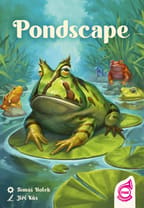
Near the end of a lot of the games on my shelf, I look down at the board and realize I've stripped it bare. The forest tiles are flipped to clearings and the quarry is empty. The meadow that held sheep cubes for the first hour is just cardboard now. I've usually done well, and the score track says so. For a few seconds, before somebody starts reading out the end-game bonuses, I feel the faint and slightly ridiculous guilt of a man who has clear-cut a piece of printed art.
Aldo Leopold has been on my mind because of that feeling. He wrote, near the end of A Sand County Almanac, "A thing is right when it tends to preserve the integrity, stability, and beauty of the biotic community. It is wrong when it tends otherwise." Leopold was a forester and a game manager long before he was anybody's philosopher. He spent his weekends restoring a worn-out farm in Wisconsin, living in an old chicken coop the family called the shack and planting pines by the thousand. He died in 1948 helping a neighbor fight a grass fire, and the book came out the following year. So the sentence comes from someone who spent decades with his hands in the dirt, watching land get used up and trying, slowly, to put some of it back.
So many of our favorite games are about taking. Forests become wood, mountains become stone, and rivers become a bonus for whoever gets there first. The final scoring counts what you pulled out of the world and almost never asks what you left behind. That's why Pondscape caught me off guard.
In Pondscape, nobody strips anything. You build a pond, one card at a time, in a small grid of fifteen spaces. Every card you lay down stays there for the rest of the game, so each placement is a decision about what kind of place this is going to be. You gather frogs of the same species into little colonies, and the bigger the colony the more it's worth, provided you've met the conditions that particular species demands. You score for a variety of habitats, so a pond that's all one thing loses out to a pond with a mix of shallows and reeds and open water. Sometimes the right play is to turn a frog card face down and let it become plain water, which feels strangely generous, like leaving a space empty on purpose.
Then there's the jumper frog. It sits in the middle of the table and belongs to no one. It hops along a row of insect cards, and every player's choice nudges it one way or another, so the hunting happens in a space everybody shares and nobody controls. The insects you tuck away at the end of a turn only pay off if your pond has the matching food on display. A frog is worth very little without the bugs it eats, and the bugs are worth nothing without a pond that can feed on them.
I find it hard to imagine a tidier picture of what Leopold meant by integrity. He didn't think a healthy community was a peaceful one. He was a hunter his whole life, and the land ethic has death built into it. Predators belong. In his most famous essay he describes shooting a wolf as a young man and watching "a fierce green fire" die in her eyes. He came to understand, too late, that the mountain had needed that wolf to keep the deer in check. A pond where nothing eats anything isn't really a pond, and Pondscape seems to know this. The frog in the middle keeps the whole thing honest.
The hard part of Leopold's sentence, and the part I keep circling back to, is that the community is the thing being weighed. The individual animal, plant or person matters as a member of the whole. Critics have pushed on this for decades. Tom Regan called it environmental fascism, and the charge has teeth, because if the health of the whole is the measure of right, you have to ask what happens to the parts that get in the way. I don't think Leopold meant his sentence to be the only rule. He seemed to picture it stacked on top of the older ethics, extending them rather than replacing them. Still, the tension is real.
Pondscape, oddly enough, makes room for that tension too. The desert rain frog scores only when it sits alone. It doesn't want a colony. Everything else in the game pushes you toward clusters and connection, and here is one small creature that does best by itself, and the game respects that and pays you for leaving it be. I like a design that knows a community isn't only a crowd, and that some of its members belong to it best at a little distance.
The more time I spend with Leopold's sentence, the more I think the real biotic community at a game night is the table. You've got the people who show up, the shelf we pull from, the new player who doesn't know the rules yet and the old friend who has heard every one of your bad jokes. That community has integrity when people play honestly and teach fairly. It has stability when everyone wants to come back next week. And it has beauty in the moments nobody planned: the comeback nobody saw coming, the groan that goes around the table at the same instant, the quiet satisfaction of a pond that finally comes together in the last couple of rounds.
By Leopold's measure, a move can be perfectly legal and still be wrong. You can bury the newcomer so thoroughly that they never ask to play again. You can hand someone the win out of spite. You can argue a rule into the ground until the joy drains out of the room. None of that breaks the rulebook. All of it tends otherwise. Explaining a game slowly, letting someone take back a placement on their first play, choosing the game that fits the people in the chairs: those are small acts of stewardship, and they keep the community whole.
When a game of Pondscape ends, the ponds sit side by side on the table for a minute while we add up the scores. They're all built from the same deck in the same fifteen spaces, and none of them looks alike. One is crowded with frogs, another is mostly open water with a single desert rain frog tucked in a corner. We lean over each other's grids and point at the clever bits. Then the cards go back in the box, and the jumper frog goes back in with them.
 Desperate Oasis
 Space Base