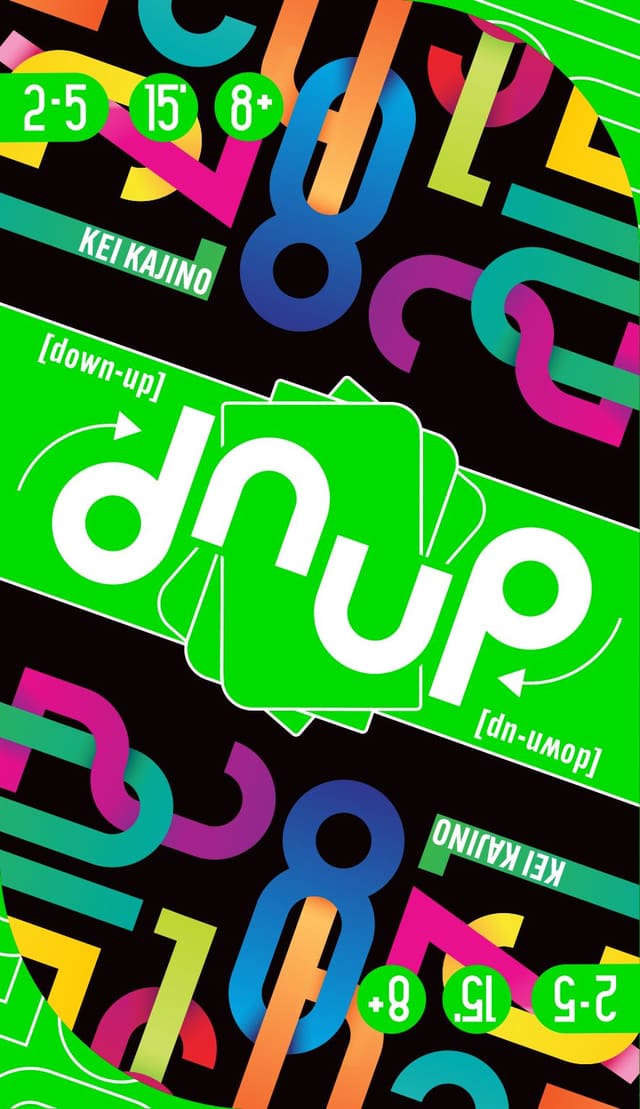
 Situational
dnup Review
6.3/ 10- Played 1 time on this shelf
- 2–5 players · best at 4
- 15–20 min
- Light
We were three days into BGG Spring, running on Hyatt food and the low hum of a hundred other tables. Someone in the Stones' group pulled out a deck I hadn't seen before, small box, minimal art, and said we should try it before the next big thing we'd scheduled. That game was dnup.
The rules took maybe ninety seconds to explain, which should have been my first clue that there was more going on underneath. You're trying to empty your hand. You can discard, you can play matching values onto the table, you can dump cards onto someone else's tableau if you're feeling uncharitable, and you can pull cards back off the table if the moment is right. There is a catch with that last action. You are pulling the cards from in front of someone else and then putting them into your hand. The twist, the thing that makes it click, is that cards have a number on top and a different number on the bottom, and you can revolve them, flip the value of a card that's already sitting there, and suddenly the strategy shits.
I lost count of how many hands we played that first night. Fifteen minutes a round, easy to reset, easy to say "one more" without anyone groaning about it. There's something almost unfair about a game that light being that sharp. You think you're managing your own hand, and then someone revolves a two into an eight and your whole plan for the round quietly stops existing.
What stuck with me, once I got it home and put it in front of my family, wasn't the mechanic itself so much as what it does to how you watch a table. In most card games you're tracking your own cards and maybe glancing at what's been played. In dnup you have to watch everything, because everything is provisional. A card on the table isn't a fact, it's a position, and positions get flipped. My kids picked up on that faster than I expected, that a table state at any moment isn't a record of what happened, it's just where things happen to be sitting right now.
I keep coming back to how much of ordinary life works the same way and how rarely we notice it. We treat a lot of things as settled, an opinion someone holds, a role someone plays in a family, a version of a story we've all agreed to, when really they're just cards sitting face up, waiting for someone with the right timing to turn them over. dnup doesn't moralize about any of that. It just hands you the mechanic and lets you feel it in your fingers, round after round, until you can't unsee it at the table or off it.
We played it at BGG Spring as a filler throughout the convention, and then I played it again at home with people who'd never held a convention badge in their life, and it held up both times, which is rarer than it sounds. Some games need the noise of a con to feel alive. This one just needed a table and somebody willing to turn a card over.