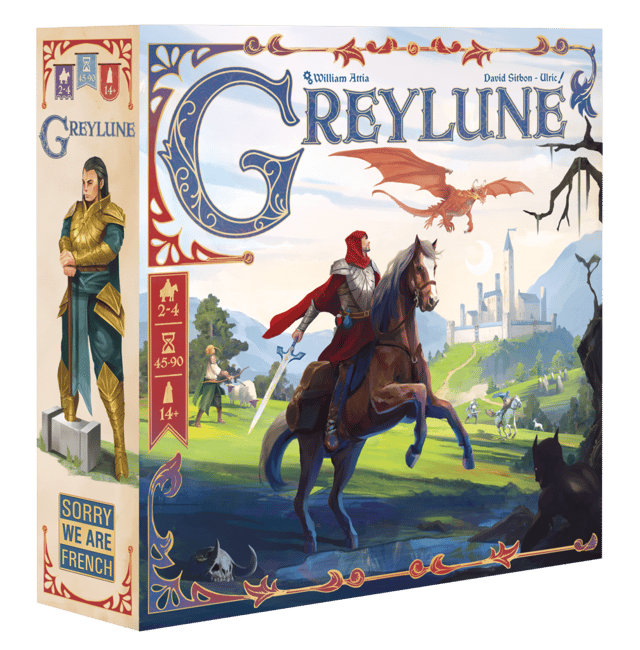
Wanting to get Greylune to the Table
I haven't touched a single wooden villager of Greylune yet. What I have done is sit with the rulebook for longer than I probably needed to, Monster Zero having gotten warm, flipping back to the seasons diagram more times than I'd admit to anyone who actually knows what they're doing with a board game manual. So this isn't a review. I don't have a session to tell you about, no funny story from the table, nobody to blame for a bad decision. This is just what's been rattling around in my head since I closed the box back up.
William Attia designed this one, the same person behind Caylus and Spyrium, and you can feel Spyrium underneath it if you squint, except turned inside out. Normal worker placement asks you to put a meeple somewhere and take the benefit right then. Greylune splits that into two separate decisions that don't have to happen close together at all. You place your villagers into the gaps between the cards that make up the city, and then later, whenever you decide later actually is, you pull them back out to collect what you were after. Placing and retrieving aren't the same turn, sometimes not even the same season, and that gap is where the whole game seems to live.
And the seasons themselves don't move together. Winter, spring, summer, fall, four of them per year, five years total, and here's the part I keep turning over: not everyone advances at the same pace. You can hang back in spring, still placing villagers, while someone across the table has already moved into summer and started cashing in. There's no rule forcing you to match anyone's rhythm. You just can't go backward once you've gone forward. I don't know yet what that actually feels like in practice, whether it's freeing or just anxious, watching other people harvest while you're still deciding where to stand. But it's a strange thing to build into a game on purpose, that people around the same table are allowed to be in different seasons of the same year.
Then there's the tavern. You go out, recruit companions, pick a fight with whatever the rulebook calls an Encounter, come back with strength or magic or coin or a story, and the story part isn't flavor text bolted onto the mechanics, it's apparently a real piece of how you score. You have to go back and tell people what happened to you. I keep thinking about that more than the resource management, honestly. A game that asks you to narrate your own adventure back to the room, out loud, as part of winning it.
I'll actually play it eventually, probably sooner than later given how much time I've already sunk into just reading about it. But there's something worth sitting with in a game where nobody's forced to move at the same speed, and where the point isn't just what you did out there, it's whether you can make it worth telling.
By Norman, BigGame on BGG Tabletop. Photography. Philosophy. The spaces where all three live.